Why Hackathons Are Essential for Engineering Students: Skills, Innovation, and Career Benefits
Engineering education is no longer limited to textbooks, classrooms, and examinations. Today, industries value engineers who can solve real problems, work in teams, adapt quickly, and convert ideas into practical solutions. This is why hackathons have become increasingly important for engineering students.
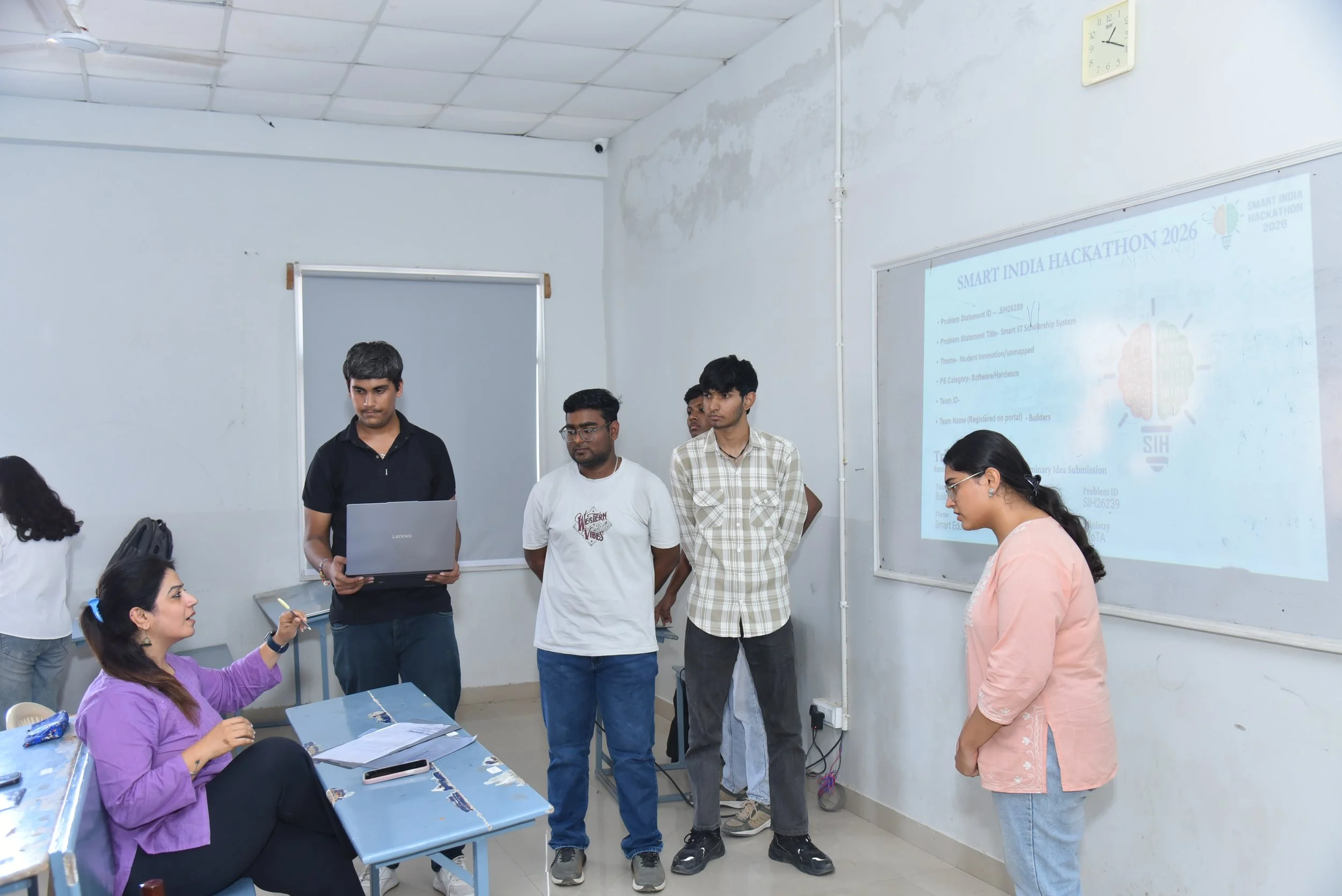
Hackathons give students a platform to apply academic concepts in real-world situations. Whether students are from Computer Science, Artificial Intelligence, Data Science, Cyber Security, Electronics, Electrical, Mechanical, or Civil Engineering, these events encourage practical learning, teamwork, innovation, and career development.
At JIET Universe, Jodhpur, students are encouraged to participate in innovation-orientated activities, technical competitions, projects, and hackathons that complement classroom learning and help build industry-relevant skills. JIET officially lists engineering programmes including CSE, AI & ML, Data Science, Cyber Security, ECE, Electrical, Mechanical, and Civil Engineering.
What Is a Hackathon?
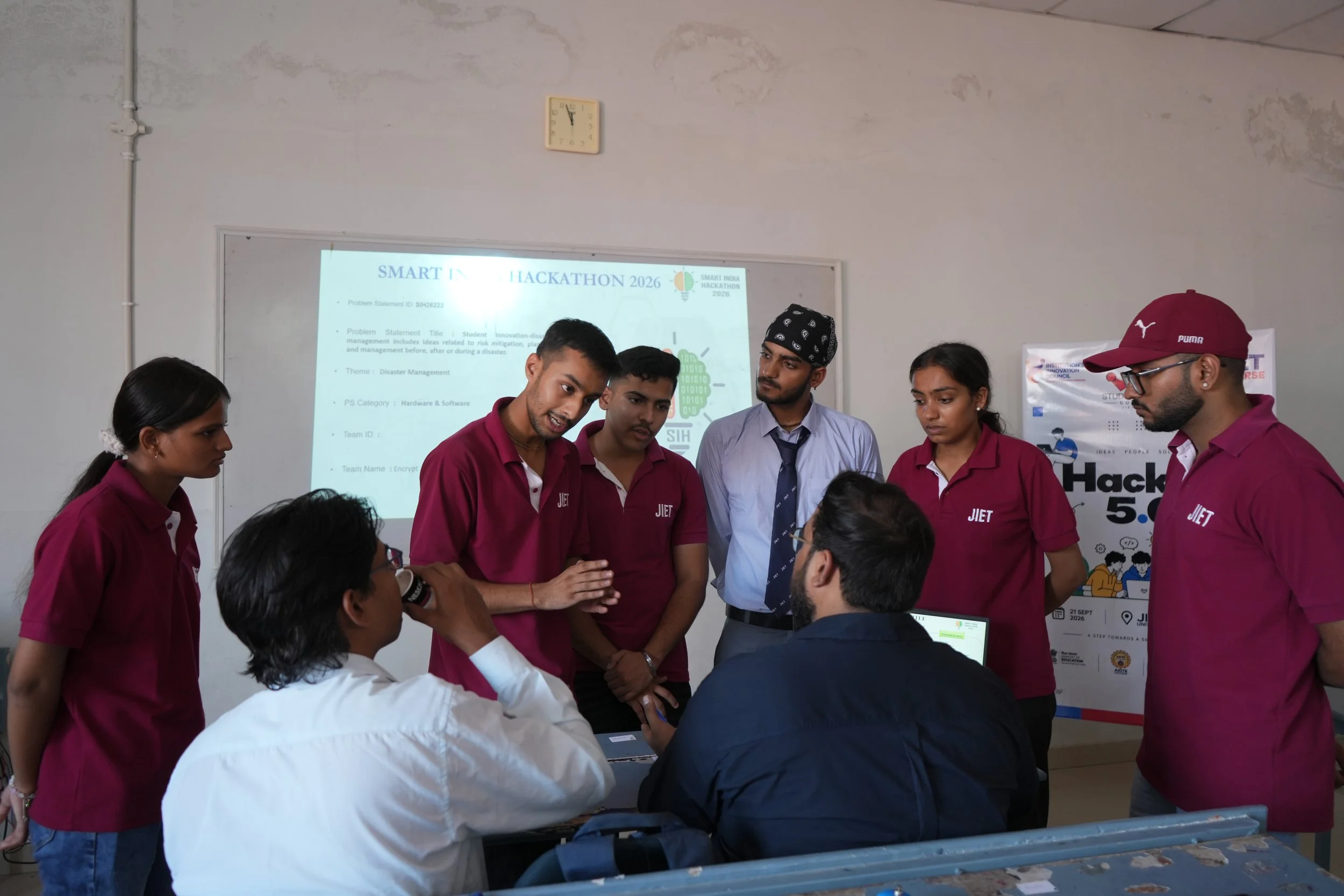
A, Hackathon is an innovation-focused event where students work individually or in teams to solve a given problem within a limited period. Modern hackathons are not restricted to coding. They may focus on:
Artificial Intelligence and Machine Learning
Data Science
Cyber Security
Web and Mobile Applications
Internet of Things
Robotics and Automation
Smart Cities
Renewable Energy
Healthcare Technology
Smart Manufacturing
Agriculture Technology
Sustainable Engineering
Students generally follow a process such as:
Problem Identification → Brainstorming → Solution Design → Prototype → Testing → Presentation
This makes a hackathon a strong example of experiential learning in engineering. The reference article you shared similarly highlights practical application, problem-solving, teamwork, industry exposure, innovation, and entrepreneurship as major hackathon benefits.
Why Are Hackathons Important for Engineering Students?
1. They Connect Theory With Practice
Students may study programming, databases, circuits, artificial intelligence, structural concepts, or mechanical design in class, but hackathons require them to actually use these concepts.
For example, a Computer Science student may study databases theoretically and later use that knowledge to build an application. An Electronics student may study sensors and then integrate them into a smart-device prototype.
Hackathons shift the student's thinking from:
“What should I remember for the examination?”
to: “How can I use this knowledge to solve a problem?”
2. They Develop Problem-Solving Skills
Real engineering problems rarely have one perfect answer.
Suppose students receive a challenge:
How can technology reduce water wastage on a college campus?
A team may develop:
IoT Sensors → Data Collection → Usage Analysis → Automatic Alerts → Monitoring Dashboard
Through such activities, students learn to:
Understand problems clearly
Analyse available information
Develop alternative solutions
Work with limited resources
Test assumptions
Improve failed ideas
Make decisions under time pressure.
These skills are highly valuable in professional engineering environments.
3. They Improve Technical Skills
Hackathons allow students to apply concepts related to their own engineering branches.
| Engineering Branch | Possible Hackathon Areas |
|---|---|
| Computer Science Engineering | Programming, Web Development, Apps, Databases, Cloud |
| AI & Machine Learning | Predictive Models, Computer Vision, Intelligent Systems |
| Data Science | Analytics, Dashboards, Forecasting |
| Cyber Security | Secure Applications, Threat Detection, Data Security |
| Electronics & Communication | IoT, Sensors, Embedded Systems, Communication |
| Electrical Engineering | Renewable Energy, Smart Grids, Automation |
| Mechanical Engineering | CAD, Robotics, Automation, Product Development |
| Civil Engineering | Smart Cities, Infrastructure, Sustainability, Water Management |
This helps students see how classroom subjects can become practical solutions.
4. They Promote Interdisciplinary Learning
Many modern problems require more than one engineering discipline.
For example, a smart irrigation system may require:
Electronics for Sensors + CSE for Software + AI/Data Science for Analysis + Electrical Engineering for Power + Mechanical Engineering for Physical Design
Hackathons teach students to collaborate beyond their own branch and think as problem solvers rather than only subject specialists.
5. They Build Teamwork and Leadership
Hackathon teams may include programmers, hardware developers, designers, researchers, analysts, and presenters.
Students naturally develop:
Communication
Teamwork
Leadership
Delegation
Time management
Decision-making
Conflict resolution
Presentation skills
These abilities are valuable for internships, placements, and future careers.
6. They Encourage Creativity and Innovation
Academic questions often have predetermined answers. Hackathons are different because students are expected to create solutions.
For example:
Problem: Food wastage in hostels
Possible Solution: AI-based demand prediction + digital meal planning + waste-tracking dashboard
This encourages students to ask:
“Can we create a better solution?”
That mindset is central to innovation in engineering education.
7. They Introduce Emerging Technologies
Hackathons expose students to areas such as:
Generative AI
Artificial Intelligence
Machine Learning
Data Science
Cloud Computing
Blockchain
Internet of Things
Robotics
Automation
AR/VR
Students do not always need advanced expertise before participating. A hackathon can itself become a learning experience.
Learn → Build → Test → Improve → Learn Again
8. They Strengthen Resumes and Portfolios
Recruiters often look beyond academic marks.
Hackathon participation may help students build:
Project portfolios
GitHub repositories
Working prototypes
Technical presentations
Certificates and achievements
Practical experience
Instead of simply writing “Machine Learning” on a resume, a student may be able to explain how they used machine learning to solve a real problem during a hackathon.
9. They Improve Presentation and Pitching Skills
Students must not only build a solution but also explain it.
A good hackathon presentation usually follows:
Problem → Gap → Solution → Technology → Prototype → Impact → Future Scope
Students learn to answer questions about feasibility, scalability, usefulness, and implementation. This strengthens communication and technical presentation skills.
10. They Encourage Entrepreneurship
Some hackathon projects can progress further:
Hackathon Idea → Prototype → Validation → Improved Product → Startup Concept
Students begin thinking about:
Customer needs
Market problems
Product feasibility
Cost
Scalability
Business models
Intellectual property
Commercialisation
This is where engineering, innovation, and entrepreneurship come together.
Hackathons at JIET Universe
JIET Universe emphasises skill development, innovation, research, industry exposure, and entrepreneurship as part of its engineering ecosystem. Its official website also highlights facilities and activities supporting innovation and projects.
Engineering students at JIET can connect hackathon activities with subjects and technical areas such as:
Computer Science and Emerging Technologies
Programming + Data Structures + Databases + AI + Machine Learning + Cyber Security + Data Analytics
Electronics + Sensors + Embedded Systems + Communication + IoT
Electrical Engineering
Electrical Systems + Control Systems + Renewable Energy + Automation
Design + CAD + Manufacturing + Robotics + Automation
Civil Engineering
Structures + Construction + Environmental Engineering + Transportation + Water Management
Hackathons therefore provide an additional platform where students can transform subject knowledge into functional projects.
Classroom Learning vs Hackathon Learning
Traditional Learning
Learn → Study → Write Examination
Hackathon Learning
Learn → Identify Problem → Apply Knowledge → Build → Test → Present → Improve
Both are important, but hackathons provide students with valuable experience in applying knowledge.
Key Skills Students Gain From Hackathons
Technical Skills: programming, prototype development, hardware integration, data analysis, engineering design, testing.
Professional Skills: teamwork, leadership, communication, project management, presentation, and time management.
Innovation Skills: design thinking, problem identification, creativity, rapid prototyping, and experimentation.
Career Skills: portfolio building, networking, practical exposure, and stronger interview discussions.
Entrepreneurial Skills: opportunity identification, customer thinking, product validation, business-model understanding, and pitching.
Tips for First-Time Hackathon Participants
Understand the problem before developing the solution.
Form a team with complementary skills.
Keep the first version simple and practical.
Focus on developing a working prototype.
Test the solution regularly.
Document the project properly.
Prepare a clear presentation.
Accept feedback from mentors and judges.
Learn from other teams.
Continue developing promising projects after the event.
Winning is not the only purpose. A hackathon can also be successful when students learn something new, build something useful, collaborate effectively, and discover their strengths.
Conclusion
The importance of hackathons for engineering students extends far beyond coding competitions and certificates. Hackathons help students convert theoretical knowledge into practical solutions while developing problem-solving, teamwork, leadership, creativity, technical skills, entrepreneurship, and industry readiness.
For students at JIET Universe, Jodhpur, hackathons and other innovation-based activities can complement programmes such as CSE, AI & ML, Data Science, Cyber Security, ECE, Electrical Engineering, Mechanical Engineering, and Civil Engineering.
The principle is simple:
Learn. Collaborate. Build. Test. Innovate.
Future engineers will not only need to understand technology; they will need to use it to solve meaningful problems.
Frequently Asked Questions
Why are hackathons important for engineering students?
They allow students to apply theoretical concepts while improving problem-solving, teamwork, technical knowledge, creativity, and communication.
Are hackathons only for Computer Science students?
No. Students from CSE, AI, Data Science, Cyber Security, Electronics, Electrical, Mechanical, Civil, and other disciplines can participate.
Can beginners participate in hackathons?
Yes. Hackathons can be valuable learning opportunities even for students with limited experience.
Do hackathons help with placements?
Hackathon projects can strengthen a student's portfolio and provide practical experiences to discuss during internship and placement interviews.
What are good hackathon topics?
Popular areas include AI, smart cities, healthcare technology, IoT, sustainability, renewable energy, cybersecurity, agricultural technology, robotics, and automation.
Does JIET Universe support innovation activities?
JIET Universe promotes skill development, innovation, projects, entrepreneurship, and industry-orientated learning for engineering students.