How Generative AI Is Revolutionizing Engineering Education in India
The rise of Generative AI in Engineering Education is reshaping the way students learn, innovate, and prepare for future careers. Technologies such as AI-powered chatbots, intelligent coding assistants, virtual laboratories, and personalized learning platforms are transforming traditional classrooms into dynamic learning environments. As industries rapidly adopt Artificial Intelligence, engineering institutions across India are integrating AI-driven teaching methodologies to equip students with future-ready skills.

Today, Engineering Education in India is no longer limited to textbooks and conventional lectures. Students are expected to solve real-world problems using emerging technologies, making Generative AI an essential part of modern engineering education.
What Is Generative AI?
Generative AI refers to Artificial Intelligence systems capable of generating new content such as text, images, code, designs, simulations, and even engineering solutions. Unlike traditional AI, which primarily analyzes existing data, Generative AI can create new ideas and help users solve complex engineering challenges.
For engineering students, this means:
Writing and debugging code faster
Designing prototypes with AI assistance
Creating engineering reports
Simulating real-world projects
Learning difficult concepts through personalized explanations
As a result, AI-powered learning is becoming one of the most significant innovations in higher education.
How Generative AI Is Transforming Engineering Education
1. Personalized Learning Experience
Every student learns differently. Generative AI adapts learning materials according to an individual's strengths, weaknesses, and pace.
Students receive:
Customized study plans
AI-generated practice questions
Instant explanations
Personalized revision notes
This personalized approach improves understanding and increases academic performance.
2. AI-Powered Coding Assistance
Coding is one of the most important skills for engineering students. Generative AI tools help students by:
Suggesting code
Detecting errors
Explaining programming concepts
Optimizing algorithms
Improving software development practices
Whether students are learning Python, Java, C++, or web development, AI significantly accelerates the learning process.
3. Smarter Research and Innovation
Engineering education emphasizes innovation and research. Generative AI assists students by:
Summarizing research papers
Generating literature reviews
Suggesting project ideas
Identifying research gaps
Assisting with technical documentation
Instead of spending hours searching for information, students can focus on creativity and problem-solving.
4. Virtual Labs and Engineering Simulations
Practical learning is essential for engineering education. AI-powered virtual laboratories enable students to perform experiments safely and repeatedly without requiring expensive equipment.
Students can:
Test engineering designs
Run simulations.
Analyze results.
Improve prototypes.
Learn through experimentation.
Virtual labs make engineering education more accessible and cost-effective.
5. Better Project Development
Final-year engineering projects often require extensive planning and technical expertise. Generative AI supports students by helping them:
Brainstorm project ideas.
Create software architecture.
Develop prototypes
Prepare documentation.
Design presentations
AI becomes a collaborative assistant that enhances productivity without replacing creativity.
6. Improved Communication Skills
Modern engineers must communicate effectively. Generative AI helps students improve:
Technical writing
Presentation preparation
Report writing
Resume building
Interview preparation
These skills significantly improve employability and professional confidence.
Benefits of Generative AI for Engineering Students
The growing adoption of AI for Engineering Students offers several advantages:
Faster learning
Better understanding of technical subjects
Improved coding efficiency
Enhanced creativity
Strong research capabilities
Real-world problem-solving skills
Higher employability
Better internship opportunities
Increased innovation
Students become more confident and industry-ready.
Industry Demand for AI-Skilled Engineers
Companies across industries are actively seeking engineers with AI knowledge.
Some major sectors include:
Artificial Intelligence
Machine Learning
Robotics
Software Development
Smart Manufacturing
Internet of Things (IoT)
Cloud Computing
Automotive Engineering
Professionals who understand Generative AI in Engineering Education gain a competitive advantage in campus placements and career growth.
Challenges of Using Generative AI
While AI offers numerous benefits, students must use it responsibly.
Some important considerations include:
Verifying AI-generated information
Avoiding plagiarism
Protecting data privacy
Developing independent problem-solving skills
Understanding concepts instead of relying entirely on AI-generated answers
Engineering institutions should encourage ethical and responsible AI usage.
How the JIET Universe Is Preparing Future Engineers
As one of the leading institutions for Engineering Education in India, JIET Universe is committed to preparing students for the AI-driven future.
The university offers industry-focused undergraduate engineering programs, including
Computer Science and Engineering
Artificial Intelligence & Machine Learning (AI & ML)
Cybersecurity
Electronics & Communication Engineering
Students benefit from:
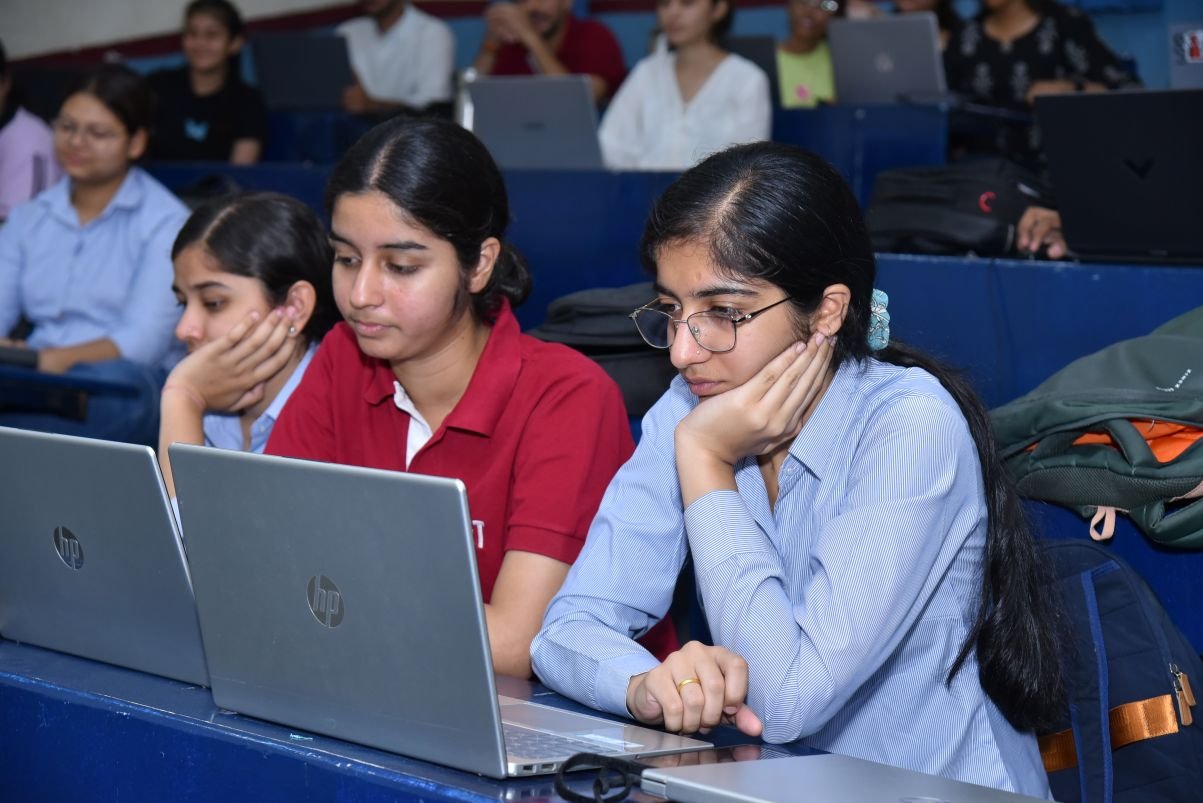
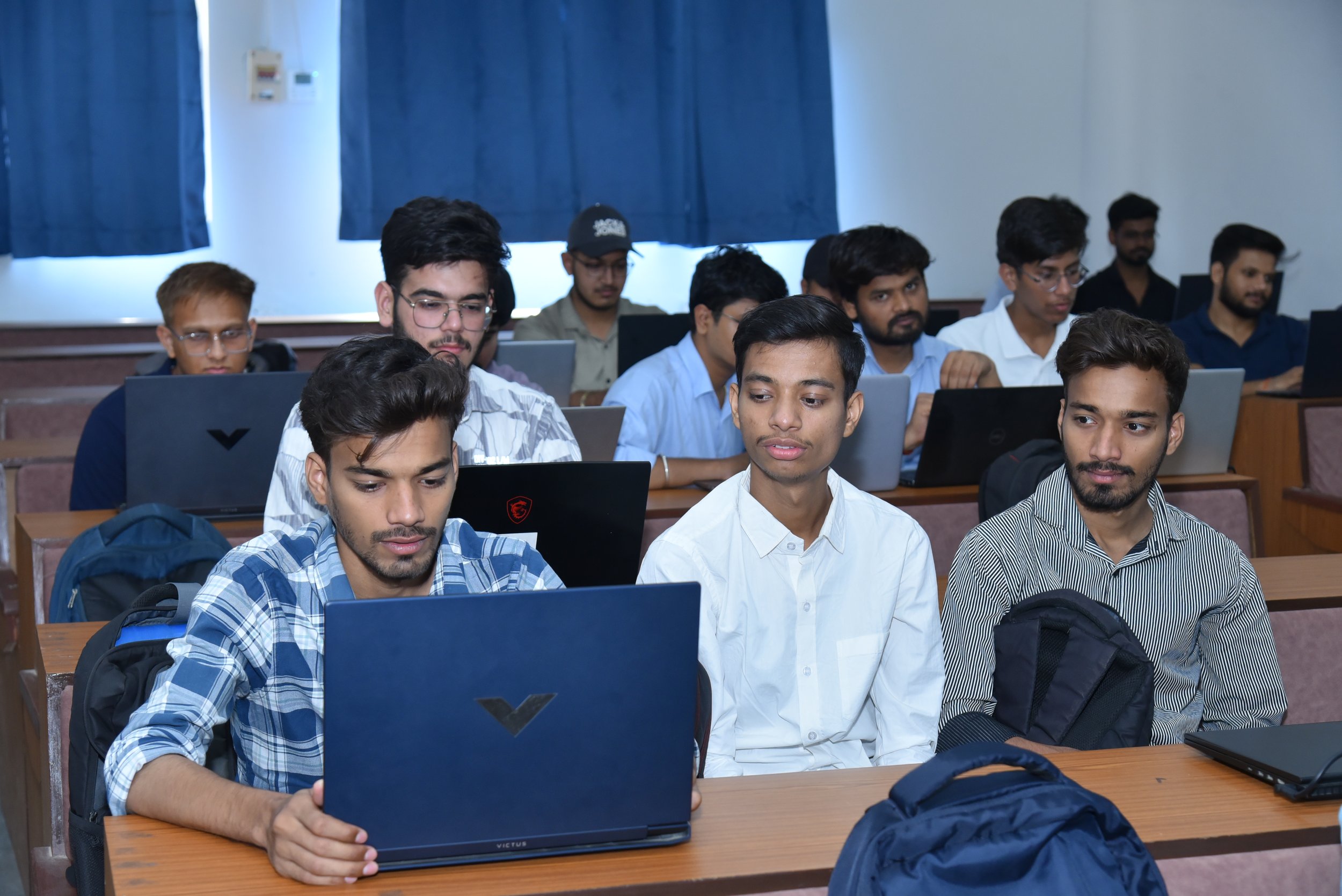
Modern computer laboratories
AICTE IDEA Lab for innovation and prototyping
IBM-supported learning ecosystem
Industry-oriented curriculum
Hackathons such as Reckon and technical events, including Resonance, workshops, expert talks, and innovation challenges. Project-based learning and interdisciplinary collaboration. These initiatives help students develop practical skills, innovation capabilities, and industry readiness for the rapidly evolving technology landscape.
The Future of Engineering Education
The future of engineering education lies in collaboration between human intelligence and Artificial Intelligence. Generative AI will continue transforming classrooms by enabling adaptive learning, intelligent tutoring, virtual experimentation, and faster innovation.
However, engineering graduates must remember that AI is a tool—not a replacement for critical thinking, creativity, ethics, and teamwork. The most successful engineers of tomorrow will be those who combine strong technical knowledge with the intelligent use of AI technologies.
Conclusion
The integration of Generative AI in Engineering Education marks a new era for higher education in India. From personalized learning and AI-assisted coding to virtual labs and advanced research support, AI is helping engineering students become smarter learners and better innovators.
As industries increasingly demand AI-ready professionals, engineering institutions must embrace this transformation. Universities like JIET Universe are equipping students with future-ready skills through modern infrastructure, experiential learning, AI-enabled education, and industry collaborations.
For aspiring engineers, learning how to work with Generative AI is no longer optional—it is a crucial step toward building a successful career in the digital economy.
FAQ’s
1. What is Generative AI in engineering education?
Generative AI uses advanced artificial intelligence to help engineering students generate code, create designs, solve problems, conduct research, and personalize their learning experience.
2. How does Generative AI help engineering students?
It assists with coding, project development, research, report writing, virtual simulations, personalized learning, and interview preparation while improving productivity and technical skills.
3. Is Generative AI replacing engineering teachers?
No. Generative AI complements teachers by providing additional learning support, while faculty continue to guide students through practical applications, mentorship, and critical thinking.
4. Which engineering branches benefit the most from Generative AI?
Computer Science, AI & Machine Learning, Cybersecurity, Electronics, Mechanical, Civil, Electrical, and Data Science all benefit significantly from AI-powered tools and intelligent learning platforms.
5. Why should engineering students learn Generative AI?
Generative AI has become an essential workplace skill. Students who understand AI tools are better prepared for internships, campus placements, innovation projects, and high-demand technology career